Cricket Practice Nets Installation: Backyard, Terrace & Sports Academy Setup Guide
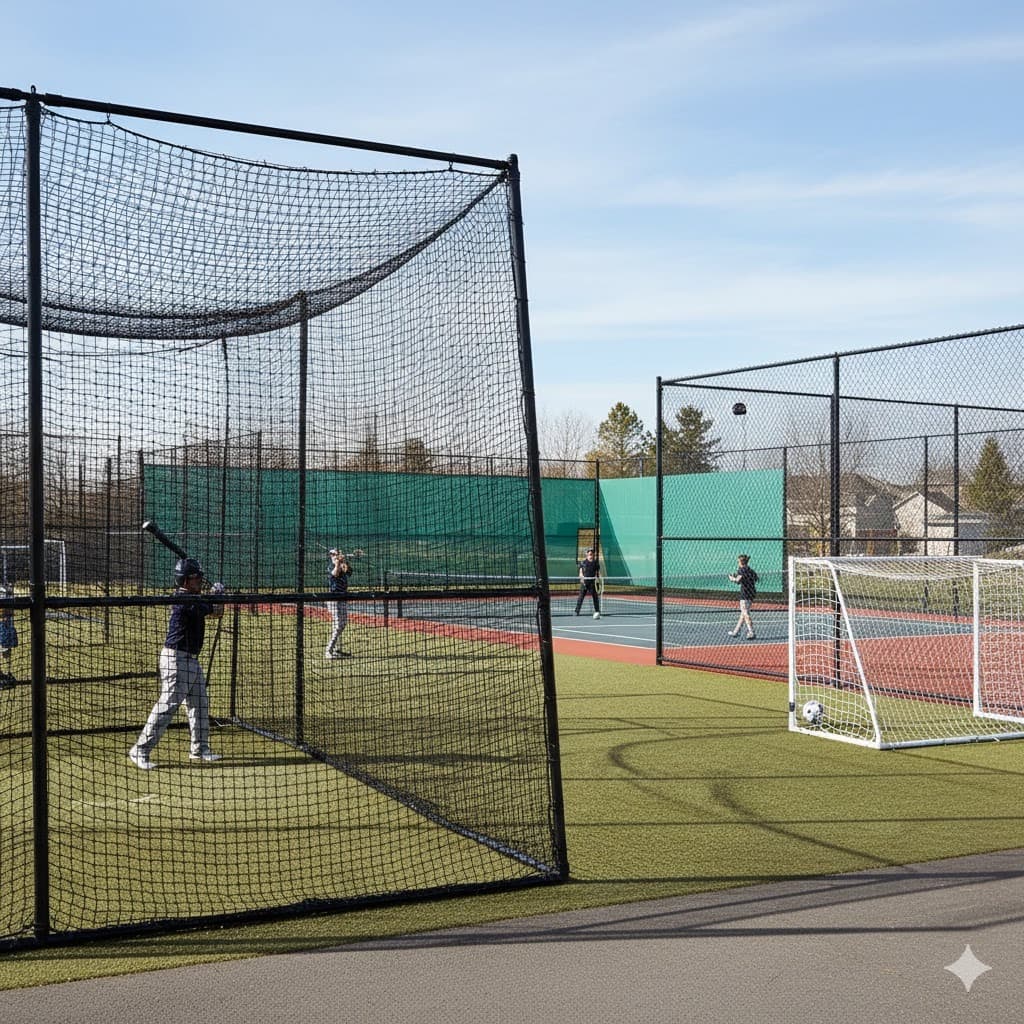
Cricket is more than just a sport across Tamil Nadu—it's a passion. Whether you are coaching an aspiring youngster in Chennai, managing a sports club in Trichy, or building a dedicated training facility on a rooftop terrace in Pondicherry, having a certified, high-impact Cricket Practice Net setup is crucial for safe and productive practice sessions.
A poorly constructed net risks ball escape, broken window glasses, injuries to bystanders, and premature net tearing from leather ball strikes. In this comprehensive technical guide, we review turf dimensions, net materials, structural frames, and terrace wind-anchoring guidelines.
Selecting the Right Net Material for Hard Leather Balls
Season leather cricket balls weigh approximately 156–163 grams and leave the bat at speeds exceeding 120 km/h. Standard recreational nets disintegrate under this impact. A professional cricket enclosure requires:
- High-Tenacity Knotted HDPE / Nylon Mesh: Knotted mesh dissipates localized kinetic energy across multiple adjacent strands, preventing mesh distortion.
- Twine Thickness: Use 2.5mm to 4.0mm braided twine for main impact zones (behind the batsman and bowler) and 2.0mm for roof netting.
- Mesh Aperture: Standard 40mm to 45mm square mesh prevents balls from slipping through while minimizing wind drag on outdoor and terrace installations.
- UV Stabilization: High-grade UV treatment ensures the netting withstands harsh South Indian summer heat without photolytic degradation.
Standard Cricket Net Dimensions for Different Spaces
| Setup Type | Dimensions (L × W × H) | Ideal Location |
|---|---|---|
| Compact Batting Cage | 30 ft × 10 ft × 10 ft | Residential terraces, small backyards, side yards |
| Standard Practice Lane | 50 ft × 10 ft × 10 ft | Schools, college grounds, apartment clubhouses |
| Full Bowling Run-Up Lane | 70 ft to 100 ft × 12 ft × 12 ft | Professional sports academies, sports complexes |
| Multi-Sport Enclosure | Custom (e.g. 60 ft × 40 ft × 20 ft) | Box cricket, football turf arenas, badminton/pickleball |
Structural Support & Terrace Wind-Anchoring Protocols
Terrace installations require rigorous structural planning to resist high wind pressure without damaging the rooftop waterproofing:
- Galvanized Iron (GI) Frame Poles: Heavy-gauge, powder-coated or galvanized steel pipes (2.5-inch diameter) prevent rust and bending under net tension.
- Base Plate Bolting vs Counterweighted Bases: Heavy steel base plates are anchored into structural parapet beams using chemical fasteners. If rooftop drilling is restricted, counterweighted concrete ballast blocks are engineered to prevent wind uplift.
- Catenary Steel Wire Suspension: High-tensile steel wire ropes (4mm) are strung between support poles with heavy-duty turnbuckles to hold roof and side netting taut without sagging.
- Bottom Skirt Weighting: Weighted bottom edges prevent practice balls from rolling out under the net onto neighboring properties or off terrace edges.
Multi-Sport Applications
Our heavy-duty practice cages are versatile and can be customized for multiple athletic disciplines:
- Football & Futsal Turf Enclosures: 100mm impact nets designed to contain high-velocity soccer balls.
- Golf Driving Net Cages: Ultra-dense 20mm archery-grade netting designed for high-velocity golf ball impact.
- School Playground Protection: Boundary netting protecting spectator galleries and classroom windows.
Transform your open space into a world-class training ground. Explore our certified Sports Practice Nets Services or request a technical quote from our engineering team today.